
Bitumen Driveways
Spray-sealed bitumen driveways for homes and longer driveways, a cost-conscious alternative to hot-mix asphalt.
Learn More →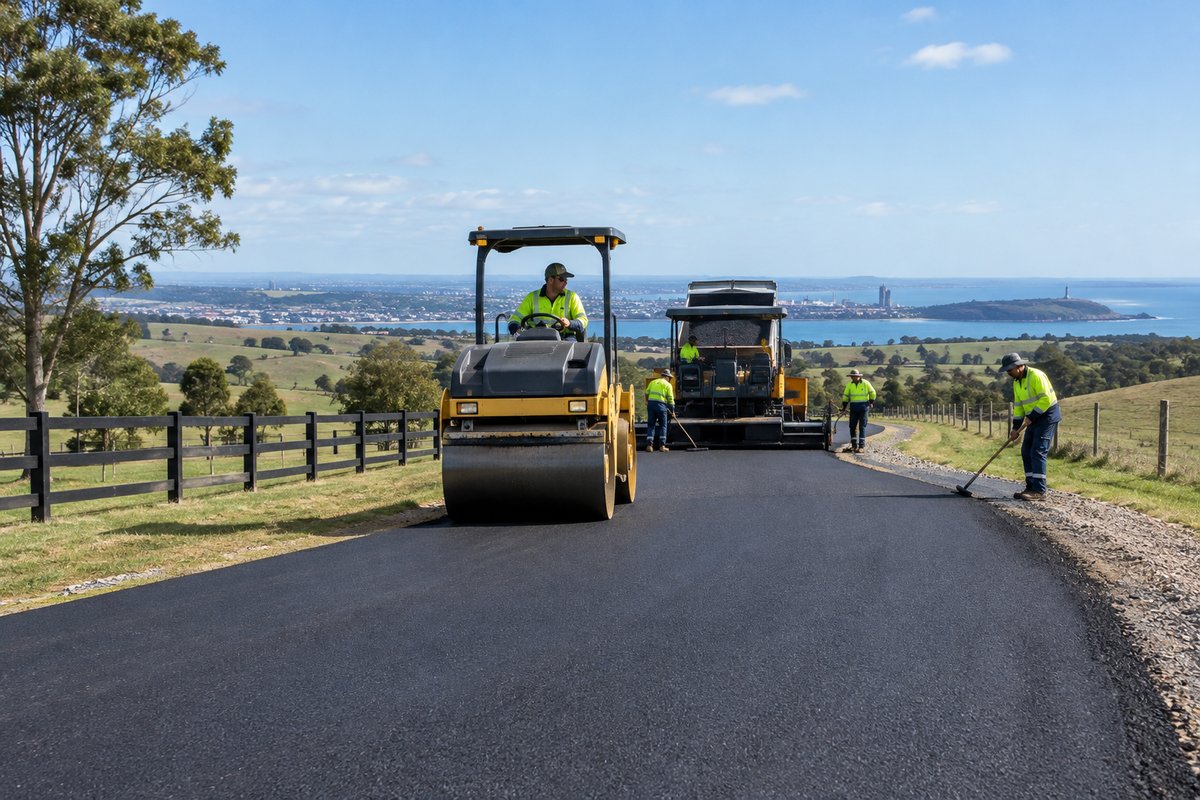
Long driveways and access tracks for acreage and rural properties across the Hunter, Lake Macquarie and Port Stephens hinterland.
Request a Free Quote
A rural driveway does a different job from a suburban one. It might run a few hundred metres from the gate to the shed, carry horse floats, tip trucks and the occasional fire tanker, and cross a gully or two along the way. We build acreage driveways from the ground up. We grade and shape the formation, lay and compact a crushed rock base, then seal it with two-coat spray seal or hot-mix asphalt depending on the traffic, the grade and your budget. Many of our rural clients choose a spray seal for the long run and hot-mix asphalt around the house and turning circle, where tyres scrub the surface hardest.
Ground conditions around Newcastle and the Lower Hunter vary a lot from block to block. Reactive clays around Maitland and the Hunter Valley swell when wet and shrink in dry spells, and that cracks a thin seal if the base is not built properly. On sandy blocks out toward Port Stephens the base needs good compaction and edge support or it ravels at the shoulders. Our humid summers and heavy east coast lows are the bigger enemy, though. Water that sits on or beside a driveway softens the base and lifts the seal, so we spend as much time on crossfall, table drains and culverts as we do on the surface itself.
Maybe your gravel track turns to slop every winter, throws stones at the ute and needs grading again after every storm. Or the old seal has potholed where water crosses it at the bottom of the hill. We can upgrade gravel to a sealed surface, rebuild failed sections, or patch and reseal an existing run through our asphalt resurfacing and repairs work. If you only need the house end done, our bitumen driveways service covers shorter residential runs and crossovers.
Earthworks, drainage, base and surfacing for long rural runs around the Hunter
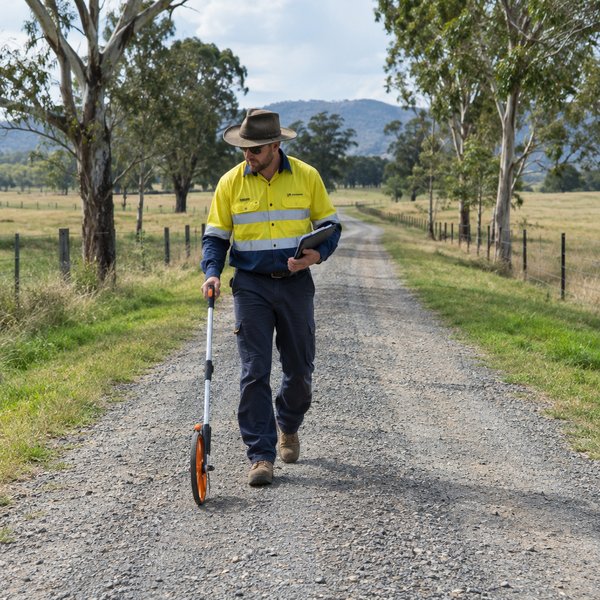
We walk the full length of the driveway with you and look at grades, soft spots, existing culverts and where stormwater runs during heavy rain. We note the vehicles that use it, from family cars to tankers, because that decides base depth and surface type. You then get a written quote that sets out the scope for each section of the run.
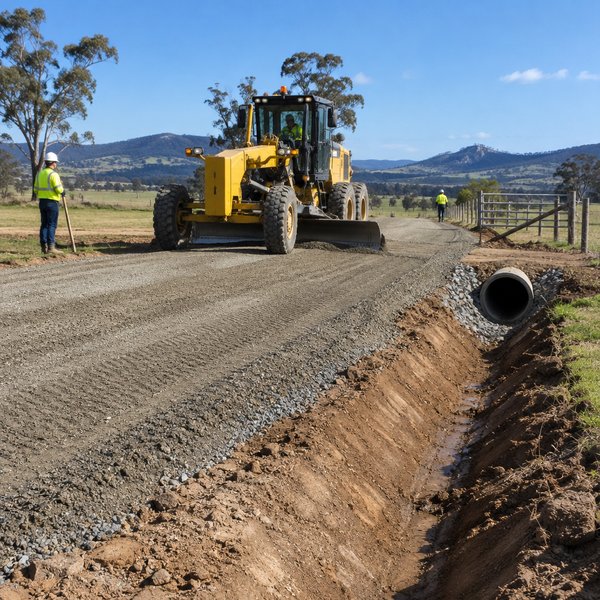
A grader or skid steer strips topsoil and soft material, then shapes the formation with crossfall so water sheds off the surface. We cut or clean out table drains and lay pipe culverts where the driveway crosses a gully or low point. Soft clay patches are dug out and replaced so they do not punch through later.
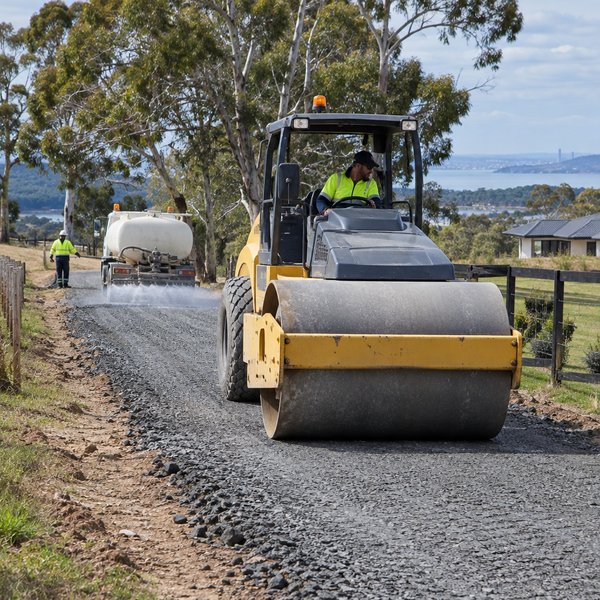
We spread crushed rock road base in layers, water it with a water cart and compact each layer with a vibrating roller. The base is trimmed to final levels and proof rolled to find any weak spots before sealing. This layer carries the weight, so we do not skip compaction to save time.
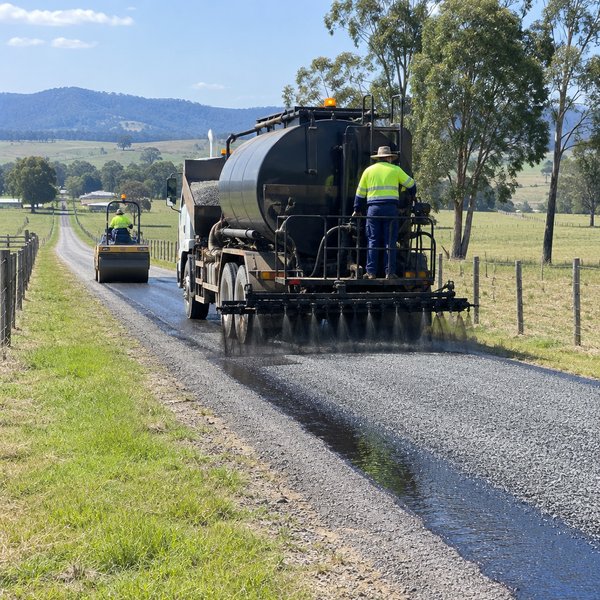
For spray seal, a sprayer truck applies a prime, then hot bitumen binder, and a spreader drops graded aggregate that is rolled in, with a second coat on top. Where we lay hot-mix asphalt, a paver places the mix at an even thickness and rollers compact it while it is still hot. We sweep loose stone, tidy the edges and talk you through when vehicles can go back on it.
Better access, less upkeep and a driveway that handles Hunter storms
A properly drained, sealed driveway stays firm after a big storm instead of turning into ruts and mud. You can get the car, the float or a delivery truck in and out without worrying about bogging. That matters when emergency services or a fuel delivery need to reach the house.
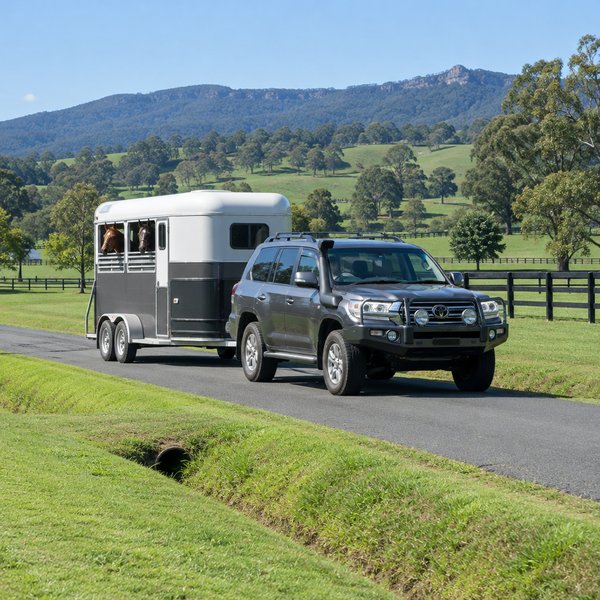
Sealing a gravel driveway cuts down the regular grading and top-ups that loose surfaces need. You get far less dust drifting onto the house, verandah and water tank catchment. Flying stones stop chipping windscreens and paintwork on every trip to the gate.
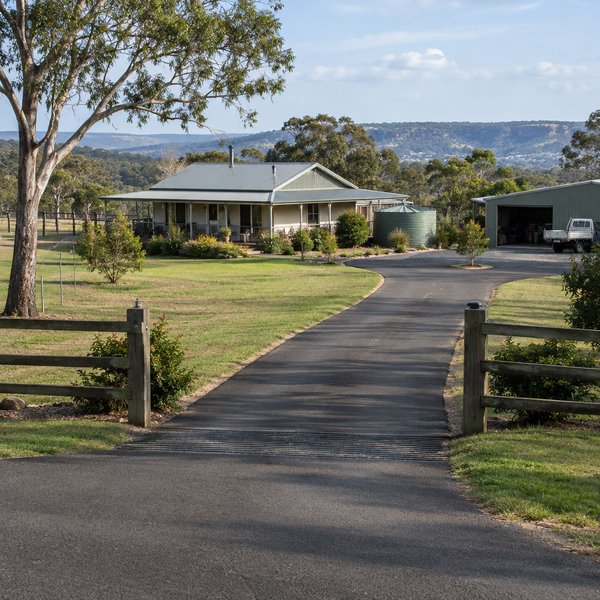
Correct crossfall, drains and a well-compacted base keep water out of the pavement, which is where most rural driveway failures start. That helps the surface resist potholes and edge breaks on reactive Hunter clays. It also means repairs stay small and local rather than a full rebuild.
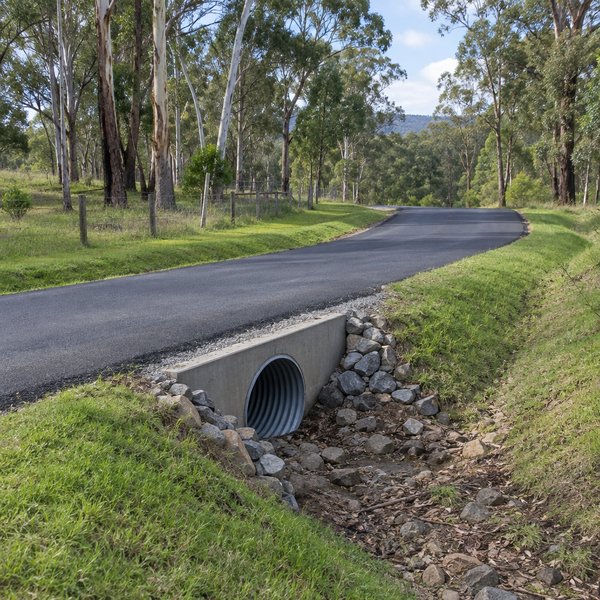
Most rural driveway failures start underneath, in a thin or wet base. We do our own grading, base construction and compaction, so the layer that carries the load is built to suit your traffic. The seal on top lasts longer because of it.
We shape crossfall, cut table drains and lay culverts as part of the same project. That matters around the Lower Hunter, where storms dump a lot of water quickly. You are not left chasing a separate earthmover to fix runoff.
We work on reactive clays around Maitland, sandy ground near Port Stephens and sloping blocks around Lake Macquarie. Each one needs a slightly different approach to subgrade prep and edge support. We plan for your ground, not a one-size-fits-all spec.
We lay both spray seal and hot-mix asphalt, so we can recommend the right surface for each part of your driveway. Shed hardstands and turning areas can be done at the same time. Commercial rural sites can add line marking where needed.
Common questions answered
Spray seal suits long runs with mostly straight-line traffic because it covers distance economically and handles rural loads well on a good base. Hot-mix asphalt is smoother and handles tight turning, so it works best near the house, shed and turning circles where tyres scrub the surface. Many properties around Newcastle and Maitland use a mix of both, and we can show you where each makes sense on your block.
The main cost drivers are: Length and width of the driveway How much base work is needed, including digging out soft clay Drainage works such as table drains and culverts Surface type, spray seal or hot-mix asphalt Access for trucks and machinery We quote each section separately so you can see where the money goes.
Sometimes, if the existing gravel is well compacted, has the right shape and drains properly. Often the gravel has thinned out, mixed with clay or lost its crossfall, so we need to reshape it and add fresh crushed rock first. We check this on site and tell you honestly whether it can be reused.
It depends on the length, how much earthworks and drainage are needed, and the weather. Base work cannot be done properly when the ground is saturated, so a wet spell can push the start back. We give you a working plan with your quote and keep you updated if rain changes it.
Keep table drains and culvert ends clear of grass, leaves and silt so water does not back up onto the surface. Fix small potholes and edge breaks early, before water gets under the seal and spreads the damage. Spray seals eventually need a reseal as the aggregate wears and the binder ages, and we can inspect it and advise when that time comes.
We provide Acreage & Rural Driveways throughout Newcastle, NSW and surrounding suburbs.
Don't see your area? Contact us to check if we service your location!
View All Areas