
Bitumen Driveways
Spray-sealed bitumen driveways for homes and longer driveways, a cost-conscious alternative to hot-mix asphalt.
Learn More →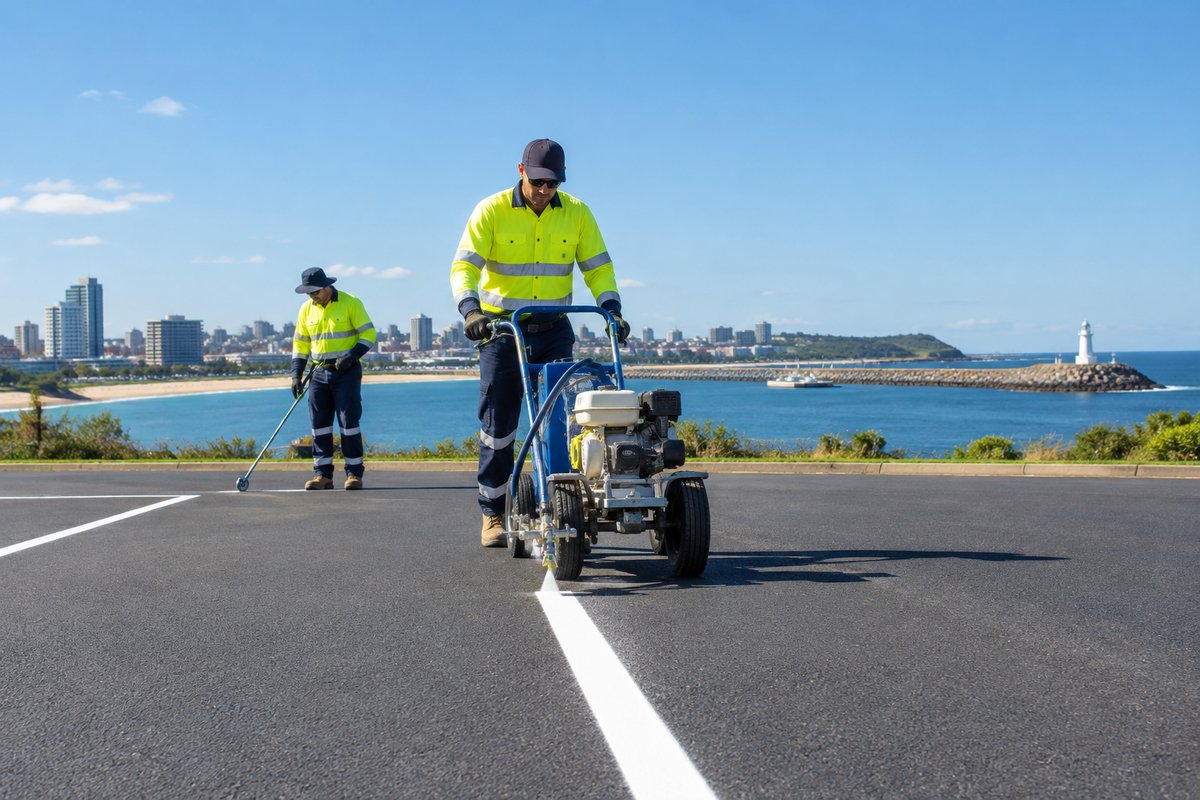
Car park line marking, parking bays, arrows, disabled bays and safety markings for new and existing asphalt.
Request a Free Quote
We mark car parks, warehouse hardstands, strata driveways and private roads on new and existing asphalt and spray seal surfaces. Most jobs use waterborne line marking paint applied with an airless line marking machine, with reflective glass beads dropped into the wet paint so lines show up under headlights. For high-wear areas like entry points, loading zones and pedestrian crossings, we can talk through tougher options such as solvent-based paint or hot-applied thermoplastic. We set out bays, arrows, accessible parking spaces and hatching using string lines, chalk lines and proper stencils, so the layout makes sense before any paint goes down.
Conditions around Newcastle are hard on line marking. Salt air along the coast, strong summer UV and the dry heat further inland around Maitland all fade and chalk paint over time. Heavy summer storms wash grit across car parks, and beach sand tracked in from Stockton or Merewether wears lines down where tyres turn. We watch surface temperature, humidity and the forecast closely. Paint laid on a damp morning or just before a storm will not bond properly, so we time the work to suit the conditions on the day.
Maybe your strata car park lines have faded to the point where visitors park across two bays. Or your new warehouse hardstand needs truck bays, forklift walkways and no-parking zones marked before you move in. We handle both, and because we lay the asphalt too, we can mark a fresh surface straight after a car park and commercial asphalt job. If the surface is cracked or potholed, it often makes sense to fix it first with asphalt resurfacing and repairs so the new lines go down on sound pavement.
From chalk line set-out to the final inspection, here is what happens on site.
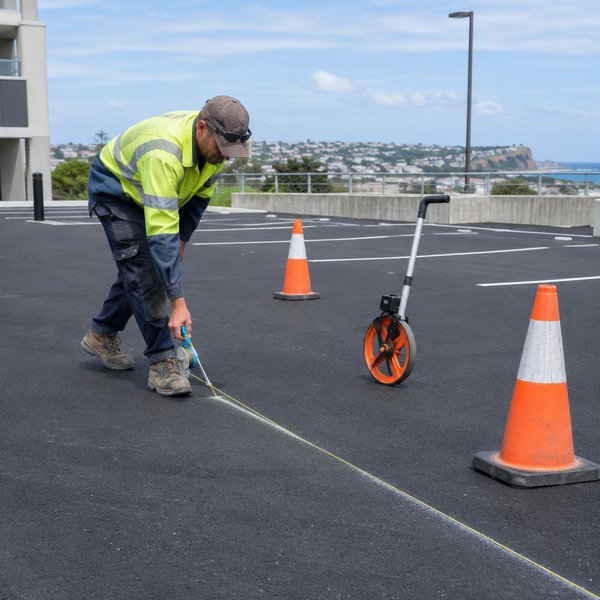
We walk the site, measure the surface and plan bay sizes, aisle widths and traffic flow to suit how vehicles actually move through it. The layout is marked out with chalk lines and string lines so you can see where every bay, arrow and walkway will sit before we commit to paint.
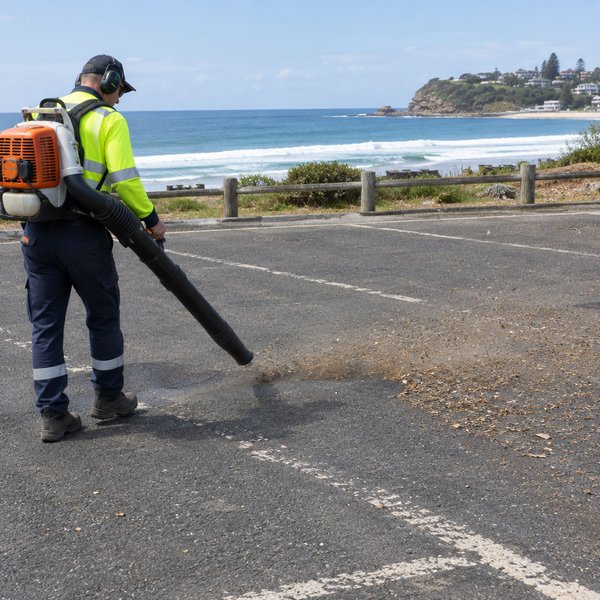
Paint only holds as well as the surface underneath it. We sweep and blow the area clear of grit, leaves and sand, then treat oil and fuel stains that would stop paint bonding. Where an old layout clashes with the new one, we remove the old lines by grinding or water blasting rather than painting black over them.
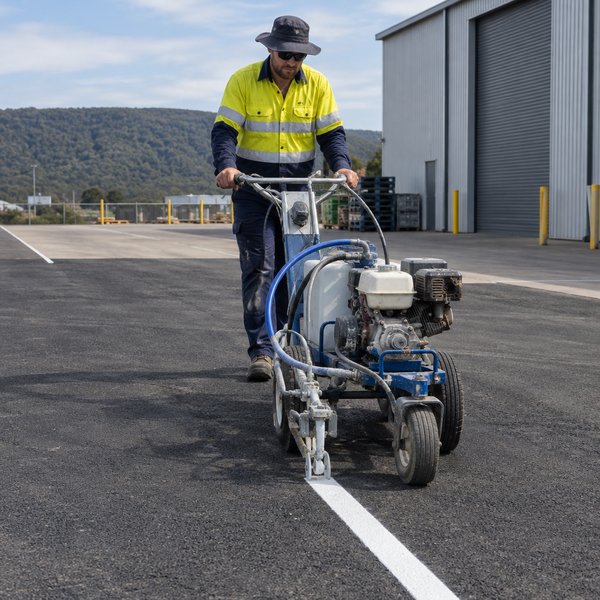
We run the lines with an airless line marking machine for clean, consistent edges and even paint thickness. Arrows, accessible bay symbols and numbers go down with stencils. Glass beads are dropped into the wet paint so the lines reflect headlights after dark.
We keep the area coned off and taped while the paint dries, which depends on temperature, humidity and the product used. Once the lines are firm, we check every bay and marking against the layout, touch up any edges and pull the cones so traffic can return.
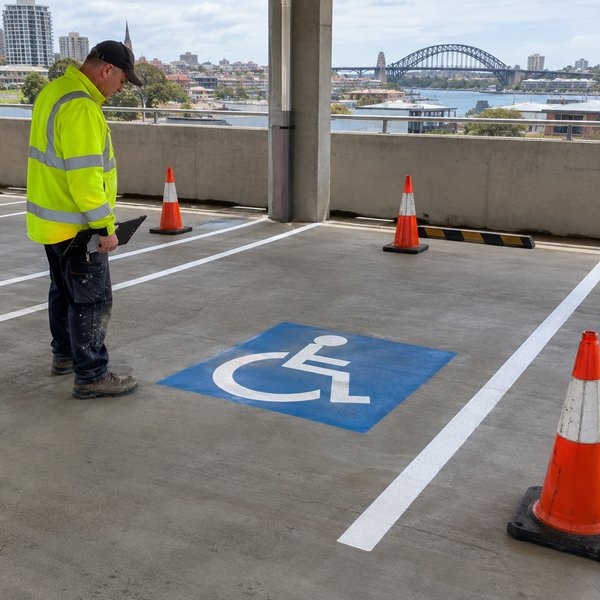
Sharp, well-planned lines make a site safer, tidier and easier to use.
Clear arrows, give way lines and marked walkways tell drivers and pedestrians where to go without guessing. That cuts down on near misses at blind corners, loading docks and busy entry points. It also helps your site meet its duty of care to staff, residents and visitors.
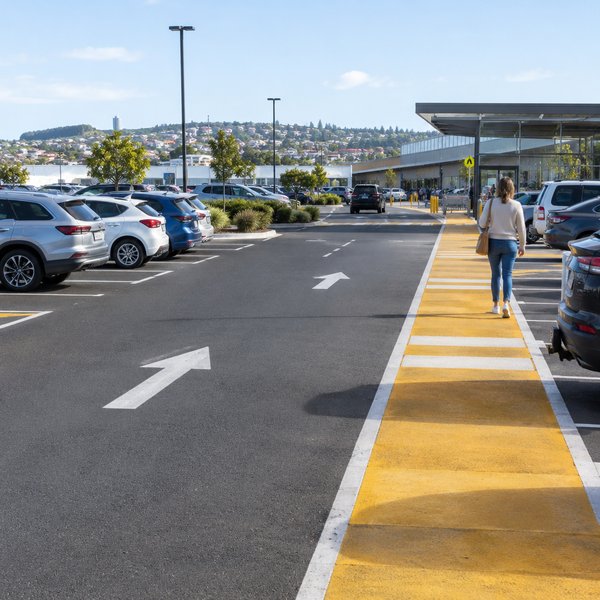
A well-planned layout can make better use of your surface than faded or badly spaced lines. Drivers park inside the bays instead of straddling two, which means fewer arguments over visitor spaces at strata sites and less frustration for customers at shops and offices.
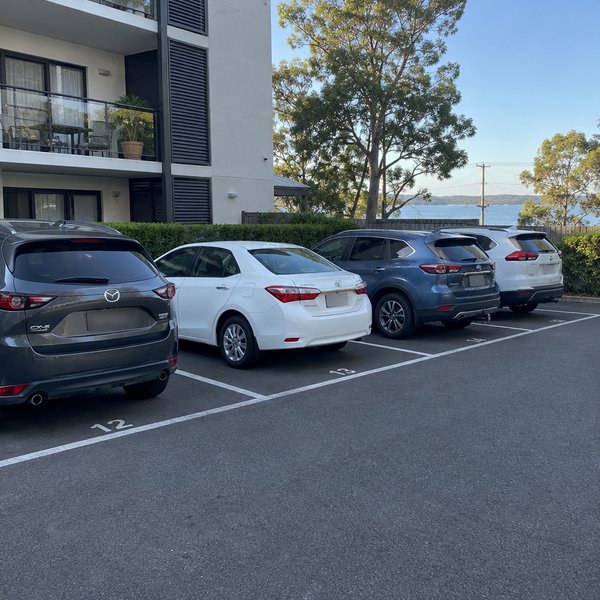
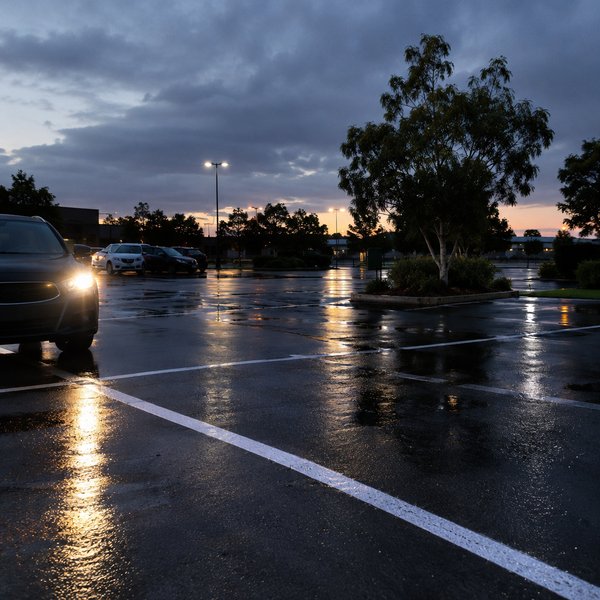
Glass beads in the paint bounce headlight glare back to the driver, so lines stay visible after dark and during Newcastle's summer storms. Fresh, bright markings also make a car park look cared for, which customers and tenants notice.
Our crews lay bitumen, spray seal and hot-mix asphalt every week. We understand how fresh asphalt cures, how spray seal texture affects paint coverage and when a surface needs repairs before it is worth marking. That knowledge shows up in how long the lines last.
We set out car park bays, aisles and accessible parking with reference to the relevant Australian Standards for off-street parking. That gives builders, strata managers and business owners a layout that works in practice and stands up when certifiers or councils take a look.
We know how coastal humidity, early morning dew, summer storms and inland heat affect paint drying and adhesion. We plan each job around the forecast and surface conditions instead of pushing on and hoping the paint holds.
Most car parks and hardstands cannot shut down completely. We can mark sections in stages, cone off small areas at a time and plan work around your trading hours or resident access where possible, so the job causes as little disruption as we can manage.
Common questions answered
Fresh hot-mix asphalt holds surface oils that can stop paint bonding and cause it to discolour. The right wait time depends on the mix, the weather and how quickly the surface cures, so we assess it on site. On some jobs we put down a temporary marking first and come back for the final coat once the asphalt has settled.
The main factors are the total length of lines, the number of stencils such as arrows, numbers and accessible symbols, and the type of paint or thermoplastic used. Old line removal, oil stain treatment and any after-hours work to avoid disrupting trade also affect the price. We measure the site and give you a clear quote that breaks these items down.
Waterborne paint suits most strata car parks, office car parks and low to moderate traffic areas, and it is simple to re-mark later. Thermoplastic is a thicker, hot-applied material that stands up better where trucks turn, at busy entrances or on pedestrian crossings. We look at your traffic and budget and recommend what makes sense for each area of the site.
We can do either. If the layout stays the same, we clean the surface and re-mark over the existing lines. If you are adding accessible bays, changing traffic direction or fitting in more spaces, we remove the old lines by grinding or water blasting so drivers are not confused by ghost markings.
It depends on traffic, turning movements and how exposed the site is to sun and salt air. Coastal car parks and sites with heavy truck traffic tend to fade sooner than sheltered, low-traffic areas. Keeping the surface swept and fixing cracks early helps the paint last, and we are happy to inspect your lines and tell you when re-marking is worth doing.
We provide Line Marking throughout Newcastle, NSW and surrounding suburbs.
Don't see your area? Contact us to check if we service your location!
View All Areas